Amis Piling
A homepage from about 6.3 MB to about 440 KB, and fonts from 835 KB to 61 KB.
- 440 KBhomepage, from 6.3 MB
- 61 KBfonts, from 835 KB
- 0cookie banners
Who it's for
Landowners, estates, boatyards and authorities on the Norfolk Broads. Many of them are in their fifties and older, and they ring rather than fill in forms.
Text that's easy to read, in any light.
So high contrast and generous type, everywhere.
A number they can ring from the riverbank, in any weather.
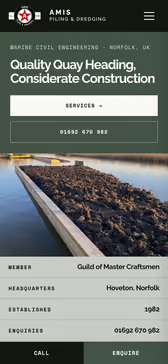
So the phone number is in the header, the footer and a bar that stays on screen, as selectable text.
Not to be watched.
So no cookie banner and no tracking cookies at all: Plausible counts visits without them.
The proposition
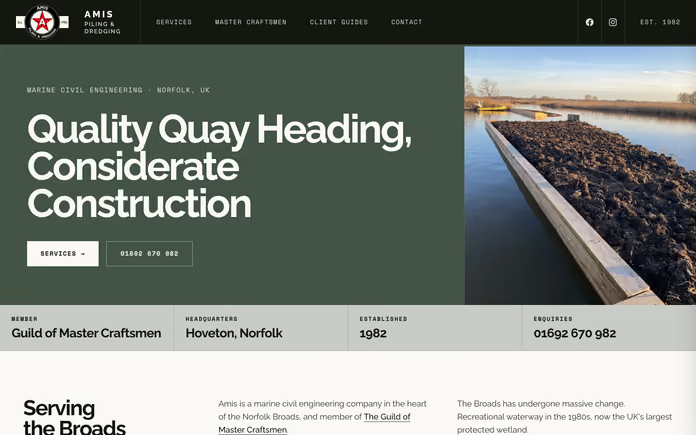
Quality quay heading, considerate construction.
First screen
The proposition is the headline, set large beside a photograph of finished quay heading on the water, so the work speaks before a word is read.
Straight after
Four facts in a strip: the Guild, where they're based, the year they started and the phone number. The four things a landowner checks before they ring.
Every page
Four decades of craft, shown in photographs of the work itself rather than described in adjectives, with the phone number never more than a glance away.
01 · Performance
Results
Homepage weight
- Before
- about 6.3 MB
- After
- 438 KB
Before: our first audit, 5 September 2026. After: 13 October 2026, on a phone, the whole page.
Fonts
- Before
- 835 KB
- After
- 61 KB
5 September 2026
Contact page
- Before
- 1.3 MB map
- After
- Removed
5 September 2026
Browser protections
- Before
- 2 of 6
- After
- 6 of 6
The six security settings browsers look for, which stop other sites hijacking or framing the page.
Before: 5 September 2026. After: 1 October 2026.
02 · Sustainability
Data saved per visit
about 5.9 MB
Every first visit, on every phone.
Carbon per visit
Before 0.93 g After 0.065 g
Carbon worked out with the Sustainable Web Design v4 model, global grid figures, from each homepage's whole-page weight on a first visit.
What they needed
The site had good content and good bones. It was let down by what you could not see. The homepage weighed about 6.3 MB, mostly photographs, and analytics and fonts loaded before visitors had agreed to anything, on a UK site under UK GDPR. They needed a site that was fast on a phone at the water's edge, honest about privacy, and safe to leave running.
The decisions we made, and why
- 01.
Photographs sized for the space they fill.
Photos shown 300 px wide weighed up to 975 KB each, because nobody had ever resized them. We served each at several sizes, so a phone gets a phone-sized file. Our first pass cut the banners too small and they blurred, so we rebuilt them from the originals at 1,800 px: sharp and heavy beats light and blurry. We also stopped compressing the old photos any harder, because every pass makes an already compressed photo worse. The real fix is fresh originals, and we're waiting for them.
- 02.
Same typeface, one tenth of the weight.
The fonts came from Google's servers in an old format and weighed 835 KB. We kept the typeface exactly as it was, served it from the site itself in the modern format, and trimmed it to the characters the site uses: 61 KB. A visitor's details no longer go to Google just to show text.
- 03.
The map came out.
The contact page's embedded Google Map cost about 1.3 MB and brought four Google services and their cookies. Search engines already knew exactly where Amis is, from the address and coordinates in the page's structured data, so a plain directions link took its place. We looked at a still picture of the map instead and ruled it out: Google's terms don't allow copying it.
- 04.
Contact made for people who ring.
Amis's customers ring. So there's no form: the phone number is plain text in the header, the footer and a bar that stays on screen on phones. Taking the form out also took out its spam check, which had added about 433 KB to the contact page.
- 05.
Counting visitors without watching them.
The old Google Analytics didn't work. Its banner saved a visitor's choice under one name and the analytics read it under another, so returning visitors who had said yes were counted as no, and a retired Google product was still loading about 147 KB on every visit. We replaced all of it with Plausible, which counts visits without cookies or personal data. No cookies means no banner to click before you can read the page, and there's a one-click opt-out on the privacy page.
- 06.
Old addresses kept working.
Old pages point to a new page only where it really covers the same thing; everything else stays "not found", because sending everything to the homepage misleads both Google and visitors.
Around the site
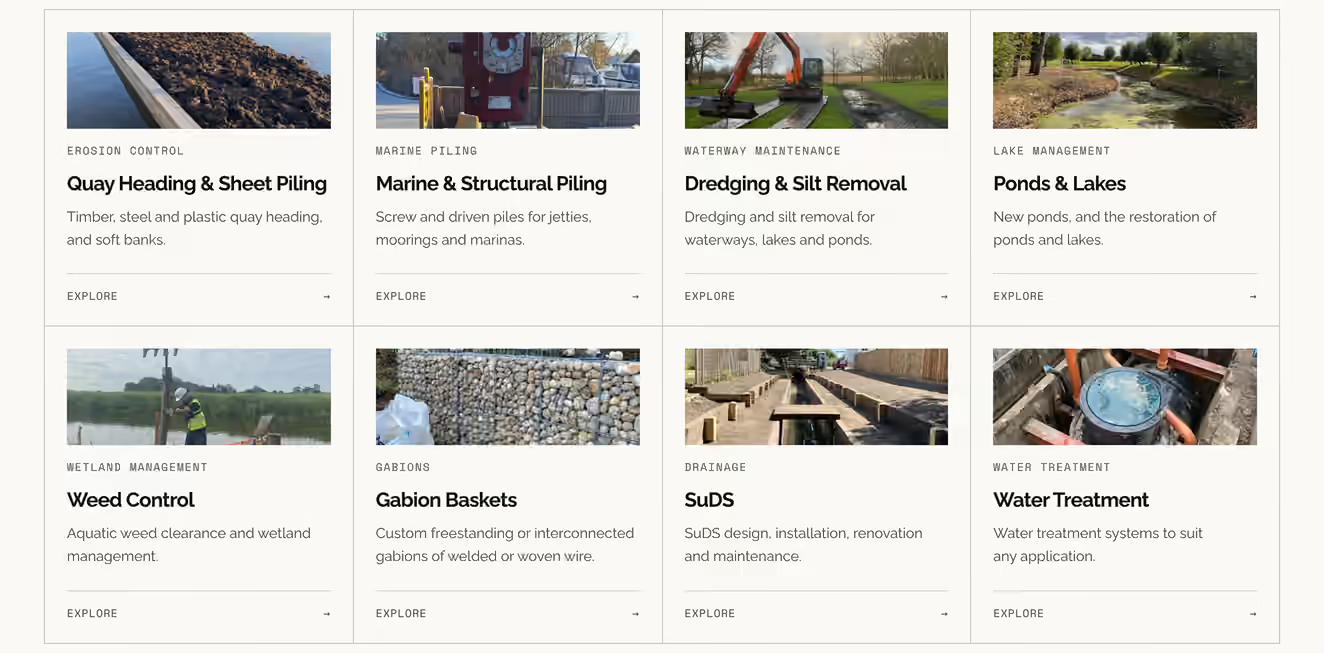
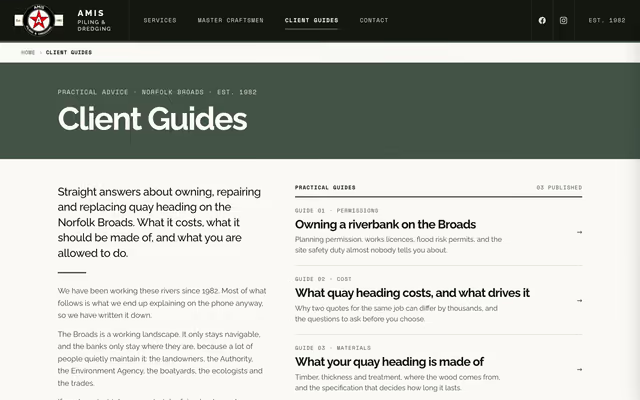
Amis has a page for each service and a set of client guides. Each one does the same job as the homepage: answer the question, then make it easy to ring.

What changed
5 September 2026
First audit. Fonts cut to 61 KB, the map removed, photographs rebuilt.
18 September 2026
On high-density screens, a service page still loaded 400 to 650 KB of photographs.
28 September 2026
Google Analytics and its banner replaced by Plausible.
1 October 2026
All six security headers live.